1. Know your Values: 2020 real estate does not require that an agent post a list price anywhere in the range of where the seller accepts the list price. That’s why you need to know the value of a home by looking at market data carefully. As an agent I do market analysis of value three ways – radius and regional sales, comparison to what other areas the same buyer may choose and the traditional method of finding 3-5 sales most similar to the subject property that sold in the last three months based on size, condition and amenities. Buyers go to Zillow or other big websites to find values but these sites use complex algorithms that do not necessarily separate for school, location , specific pocket and they may be influenced by a home that is in poor condition that has recently sold in the neighborhood. Therefore you need to rely on your agent to create comparable sales data.
2. Location, location, location: What is the secret is knowing WHERE and WHY people are buying at top dollar. Because of Silicon Valley prices, people need to travel to find housing and they are always looking for locations which will be good compromises closer to their place of work or community. First and foremost the anchor to hold value is schools. Higher scoring elementary schools generally means better neighborhoods and much higher prices. See my value predictive map . Next proximity to work is becoming more and more important. This factor due to our traffic even with more people staying at home is important. Schools are secondary now to a lot of purchasers with young children or considering families. That factor is changing the values of certain neighborhoods and if you are looking for a home to hold your money for 5-7 years look for these pockets of homes where school might not be primary but commute time is.
3. Condition: Buyers purchase on photographs and sometimes only see a home once before making an offer. If your home does not photograph well then the value may be driven down. Buyers beware: a home may look pretty but will be hiding many expensive upgrades required down the line. Be sure to use a realtor that knows the cost of what expenses will be over the next 5-10 years in any home. Flips that cover up termite damage or landscaping costs, poorly installed windows can be a real problem down the road
4. Area: Silicon Valley has a huge diversity of housing and locations with different socio-demographics and communities. Look at chambers of commerce, school scores even if you are not planning to have kids and ask your realtor to run the tax roles on the street that interests you – you may find out a lot when you know who your neighbors are.
5. Take your time: Buying or selling should not be a hurried decision. It may be the most expensive purchase or sale you will make. It’s far less important to negotiate details of commission by some fraction of the sale than making the whole process rewarding from start to finish and walking away with the best price for your home. Trust that a successful realtor will advise you when not to sell and add value such as tax benefits of sales and relocations. Call Sandy Kay 408 202 0608
Author: Sandy Kay
-
5 Important Things Everyone Needs to Know about Silicon Valley Real Estate
-
Word on the street in October 2020
As you know I meet a lot of different people in different walks of life from surfers to tradespeople to CEOs. The state of commercial markets is pretty dim as vacancies are high. Small businesses are really struggling and with advent of bad weather their economic outlook is even more dim. While 661,000 jobs were created in September, that’s way down from 4.8 million in June, 1.7 million in July, and even 1.5 million in August. This is one of the biggest concerns our country and state face. With only half of people back to work since COVID and the uncertainty of another stimulus package the results could mean serious small business closures and turmoil to the blue collar sector homes on the market. Hello Congress?
While many of my readers are working from home and in high tech jobs what does this mean to you? Stabilization of the middle class promotes efficient and honest delivery of government services, as well as forward-looking public investments—in education and infrastructure, for example—that benefit all of society rather than only special interests. Such good governance sets the stage for economic growth. Destabilzation of the middle class promotes unrest, higher crime rates, more difficult daily life. It diminishes our democratic way of life. The American dream and middle class lifestyle promotes a sens of well being and accomplishment which drives contributions to charities, schools and other services. It stimulates spending.
-
A Historic Rebound for the Housing Market
A Historic Rebound for the Housing Market

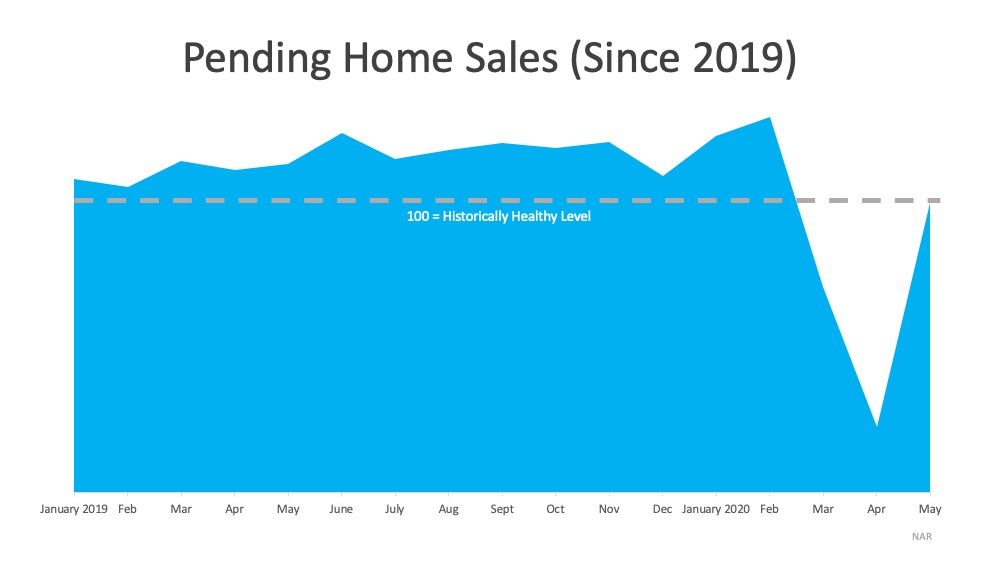
Pending Home Sales increased by 44.3% in May, registering the highest month-over-month gain in the index since the National Association of Realtors (NAR) started tracking this metric in January 2001. So, what exactly are pending home sales, and why is this rebound so important?
According to NAR, the Pending Home Sales Index (PHS) is:
“A leading indicator of housing activity, measures housing contract activity, and is based on signed real estate contracts for existing single-family homes, condos, and co-ops. Because a home goes under contract a month or two before it is sold, the Pending Home Sales Index generally leads Existing-Home Sales by a month or two.”
In real estate, pending home sales is a key indicator in determining the strength of the housing market. As mentioned before, it measures how many existing homes went into contract in a specific month. When a buyer goes through the steps to purchase a home, the final one is the closing. On average, that happens about two months after the contract is signed, depending on how fast or slow the process takes in each state.
Why is this rebound important?
With the COVID-19 pandemic and a shutdown of the economy, we saw a steep two-month decline in the number of houses that went into contract. In May, however, that number increased dramatically (See graph below):
 This jump means buyers are back in the market and purchasing homes right now. Lawrence Yun, Chief Economist at NAR mentioned:
“This has been a spectacular recovery for contract signings and goes to show the resiliency of American consumers and their evergreen desire for homeownership…This bounce back also speaks to how the housing sector could lead the way for a broader economic recovery.”
But in order to continue with this trend, we need more houses for sale on the market. Yun continues to say:
“More listings are continuously appearing as the economy reopens, helping with inventory choices…Still, more home construction is needed to counter the persistent underproduction of homes over the past decade.”
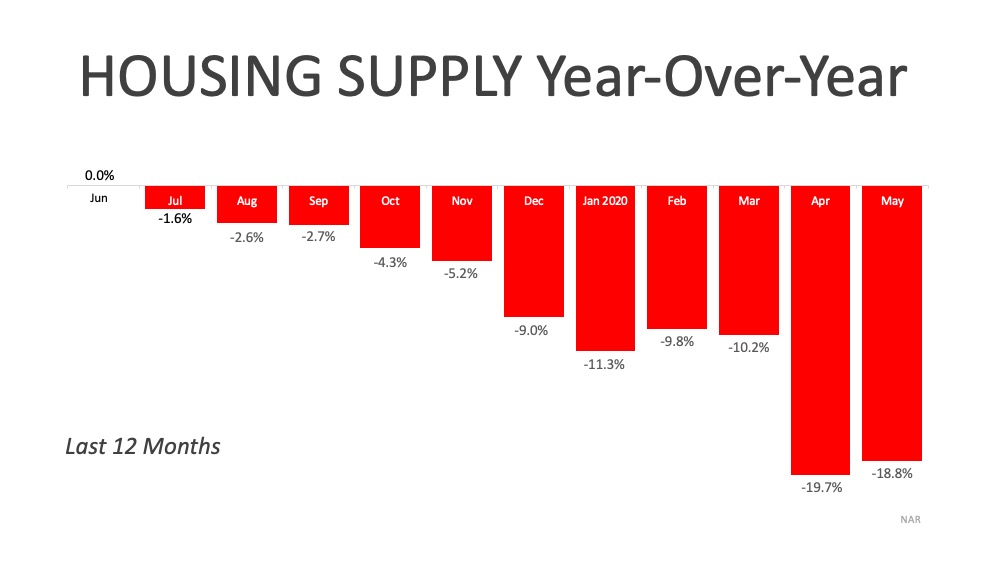
As we move through the year, we’ll see an increase in the number of houses being built. This will help combat a small portion of the inventory deficit. The lack of overall inventory, however, is still a challenge, and it is creating an opportunity for homeowners who are ready to sell. As the graph below shows, during the last 12 months, the supply of homes for sale has been decreasing year-over-year and is not keeping up with the demand from homebuyers.

Bottom Line
If you decided not to sell this spring due to the health crisis, maybe it’s time to jump back into the market while buyers are actively looking for homes. Let’s connect today to determine your best move forward.
-
How do Election years affect real estate prices?
HOW IS REAL ESTATE AFFECTED BY A PRESIDENTIAL ELECTION?
Elections have historically affected house prices with a slightly lower percentage increase in value. According to Movoto: the California real estate market typically rises 1.5% less during an election year than in the year prior to the election, and 0.8% less than in the year following the election. This may not seem like much, but these percentage differences can add up over time. An election year could potentially cost homeowners thousands of dollars in lost value the larger the asset.House Price Trends During Election Years
Data from Freddie Mac Finance.Using the Freddie Mac House Price Index, Gord Collins, a SFO agent who looked into the historical effect that election years have on U.S. real estate prices as compared to off years. The off years that are considered are the even-numbered years that fall between elections. Using the percentage increase for the 12th month of each year in the sample, he found that house prices in the off years increased, on average, by 0.22% more than house prices in election years. The chart (right) details the percentage increases for each year in the sample since 1978. For 2016, house prices are estimated to increase 3%, a drop from 5% in 2014.
According to an economic study published in the British Journal of Political Science, elections cause a decline in the number of home sales as well as a slight price decrease. The decline is greater in tight elections where there is increased uncertainty. This change can be compared to the effect of other market factors, such as growth in per capita income.
WHY DO ELECTIONS AFFECT HOME PRICES?
It may seem a bit strange for a presidential election to affect your home’s value, but the potential explanations for this effect may bring about more understanding. The Movoto study hypothesizes that election years can be stressful and uneasy for many Americans. And people are less likely to make large purchases, such as a house, in very uncertain times. The results of the election can potentially affect the finances of Americans, so fewer people are willing to invest in a home when their financial future appears to be uncertain or influenced by the incoming president.Realtytoday.com states that researchers conducted a survey during the 2008 election and found that “the election was really weighing on the minds of the would-be buyers.” Different presidents in their respective parties may have different housing and mortgage policies that may affect buyers in various ways. These risks are concerning to potential homebuyers, and many may choose to wait and buy during a time that appears to be more politically stable. Currently really low interest rates are driving buyers to purchase so selling now may be good but buyers might be willing to wait for better prices.
Learn More about YOUR home sale or purchase>>
-
Now that the Fed has cut rates, what’s next for mortgage rates?
August 2, 2019
Are your buyers aware of the opportunity offered by today’s market?
After the Fed’s rate cut, there’s lots of talk about lower rates. Whether mortgage rates rise or fall from here, it’s still a great time to be a homebuyer
Many homebuyers may be expecting lower mortgage rates in the wake of the Federal Reserve’s decision* on Wednesday, July 31, to reduce their benchmark federal-funds rate, the first easing of monetary policy in over ten years. Because it was so widely expected, the Fed’s move was already reflected in mortgage rates. That is, the cut in the short-term rate was already “priced into” mortgage yields by the time it came. The only question ahead of the rate cut was how aggressive it might be – a half-point cut or, as it turned out to be, a quarter-point cut? The key point to remember: Although mortgage rate changes can be volatile, they move in response to shifting market conditions and in anticipation of Fed policy. They do not change in reaction to a Fed policy change that was widely anticipated.
Additionally, mortgage rates and other long-term rates are influenced by many other factors than just the Fed, which operates on securities with very short maturities. As recently as last December, when the Fed raised the target on its benchmark rate by 0.25%, mortgage rates were falling and were almost a quarter-point lower than November’s average rate of 4.87%.
And that decline in December was just the beginning of a continuing drop in mortgage rates through the first seven months of 2019. The 30-year fixed-rate mortgage averaged 3.77% in July.
The great news is that we are enjoying the lowest mortgage rates we’ve had in a couple of years. Consider the impact from the decline in rates since November. For the 30-year fixed-rate mortgage, the decline from November’s 4.87% to July’s 3.77% reduces the monthly principal and interest payment by $65 for every $100,000 borrowed, a savings of over $23,000 over the term of the loan.
While mortgage rates have been falling, home price increases have been decelerating. The most recent reading of a popular home price gauge shows a 5.1% increase over the past twelve months. A year ago, home prices were rising at a 7.4% rate.
Meanwhile, home sales have been cooling off, with existing home sales 4.2% lower through the first half of 2019 than the same period last year. But applications for home loan purchases are up 6% over last year, reflecting an increase in first-time homebuyers.
The combination of low mortgage rates, a more balanced housing market, and slower home price growth may give your customers additional motivation to act now to purchase a new home.
And, as the recent Wells Fargo Homeownership Study shows, Americans continue to highly value homeownership – and it remains a top priority for them in achieving financial security.
*The Fed’s action
The Fed lowered its target range for the federal-funds rate by a quarter-point, to 2.00% to 2.25%. Previously, the target range, the Fed’s primary policy lever for rates on short-term securities, was 2.25% to 2.50%.It’s the first rate cut in over ten years and ends a series of nine consecutive quarter-point increases that began in December 2015.1
Belana ChechelnitskyHome Mortgage Consultant
NMLSR ID 357881Wells Fargo Home Mortgage | 1995 EL CAMINO REAL SUITE 200 | SANTA CLARA, CA 95050
MAC A0580-024
Cell 408-219-9141